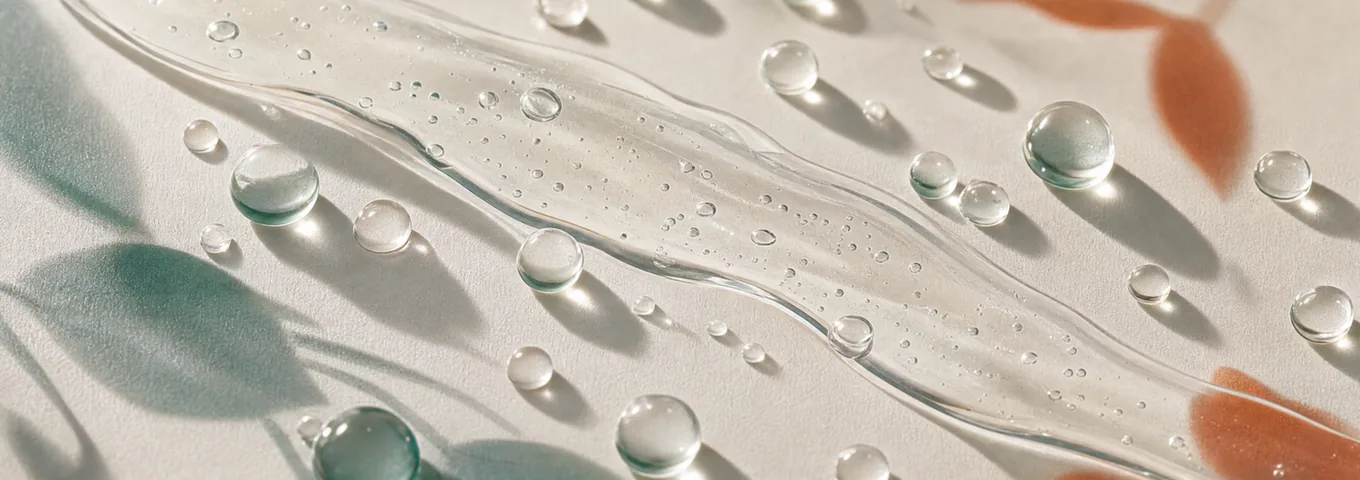
Snail mucin has been a fixture of Korean skincare for long enough that it's not really a novelty anymore — it's just a normal category, sitting next to centella and niacinamide on the shelf. But it's also one of the ingredients people are most curious about, mostly because the name is so literal. Here's what it actually is, what it feels like, and who tends to like it.
What snail secretion filtrate actually is
The ingredient usually listed as "snail secretion filtrate" is the mucus-like fluid snails naturally produce, collected and processed for use in skincare. In modern cosmetic-grade production, snails are typically kept in dedicated, carefully managed farms and gently encouraged to move across a mesh or textured surface, which is where the secretion is left behind and gathered. From there, it's filtered, purified, and stabilized before it ever gets near a formula — the "filtrate" part of the name refers to that filtering step.
It sounds like an unusual thing to put on your face, but functionally it behaves a lot like other complex, humectant-rich skincare ingredients: a mix of natural sugars, proteins, and other compounds that help draw and hold moisture at the skin's surface. Korean brands have built entire product lines around it precisely because it formulates into such a distinctive, likeable texture.
The texture people describe as "bouncy hydration"
If there's one word that comes up over and over in how people describe snail mucin, it's "bouncy." Essences and serums built around it tend to have a slightly tacky, gel-like feel when you first pat them on, which settles within a minute or two into a smooth, plump, cushioned finish. It's a different sensation from a thin, watery toner or a rich, heavy cream — it sits somewhere in between, and a lot of people find that in-between texture satisfying in a way that's hard to describe until you've tried it.
That bounce comes from how the ingredient interacts with water at the surface of the skin, helping it feel more supple and hydrated rather than tight or thirsty. It's a sensory experience as much as anything else, which is part of why the category has such a devoted following.
Who tends to like it
Snail mucin tends to appeal most to people whose skin regularly feels thirsty, tight, or a little dull — the kind of skin that seems to drink up moisturizer and still feel like it wants more by midday. It's also popular with people who like a plumper, dewier finish rather than a matte one, since the texture leaves a soft sheen rather than a flat look.
It's a flexible ingredient in that most skin types can try it, but if your skin already leans oily and shine-prone, you may prefer a lighter essence texture over a heavier snail mucin cream, simply so you're not adding more richness than your skin wants.
Patch-testing and layering it in
As with any new ingredient, it's worth patch-testing snail mucin before working it into your full routine — apply a small amount to your inner arm or just below the jaw and wait a day or two to see how your skin responds. This matters even for ingredients with a gentle reputation, since everyone's skin has its own history and sensitivities.
Once you've confirmed it agrees with you, most snail mucin essences slot in early in a routine, right after cleansing and toning and before your regular serum and moisturizer. If you're using a version with a thicker, cream-like texture instead of a runny essence, it usually works better later in the routine, close to your moisturizer step, since a heavier texture applied too early can make everything layered on top feel like it's sliding rather than absorbing.
A good starting point if you want to try the category is the COSRX Advanced Snail 96 Mucin Power Essence (paid link), which is one of the more widely recognized versions of this texture and a reasonable way to see whether the "bouncy hydration" feel is for you before committing to a whole routine built around it.
Naming the vegan alternatives honestly
If you'd rather avoid an animal-derived ingredient, it's worth saying plainly: snail mucin is not vegan, and there isn't a lab-made identical substitute that recreates it molecule for molecule. What you can do instead is look for formulas built around other humectant-rich ingredients that aim for a similar plumping, moisture-retaining effect — things like hyaluronic acid, beta-glucan, or fermented ingredients are common plant- or lab-derived alternatives that show up in Korean essences marketed toward similar thirsty, dull-feeling skin.
These won't feel identical to a snail mucin essence — the exact bouncy texture is fairly particular to this ingredient family — but they're a reasonable way to chase a similar hydration goal without an animal-derived ingredient on the label. If this matters to you, it's worth reading ingredient lists directly rather than trusting marketing claims alone, since "snail-free" isn't always called out clearly on packaging.